Vestments
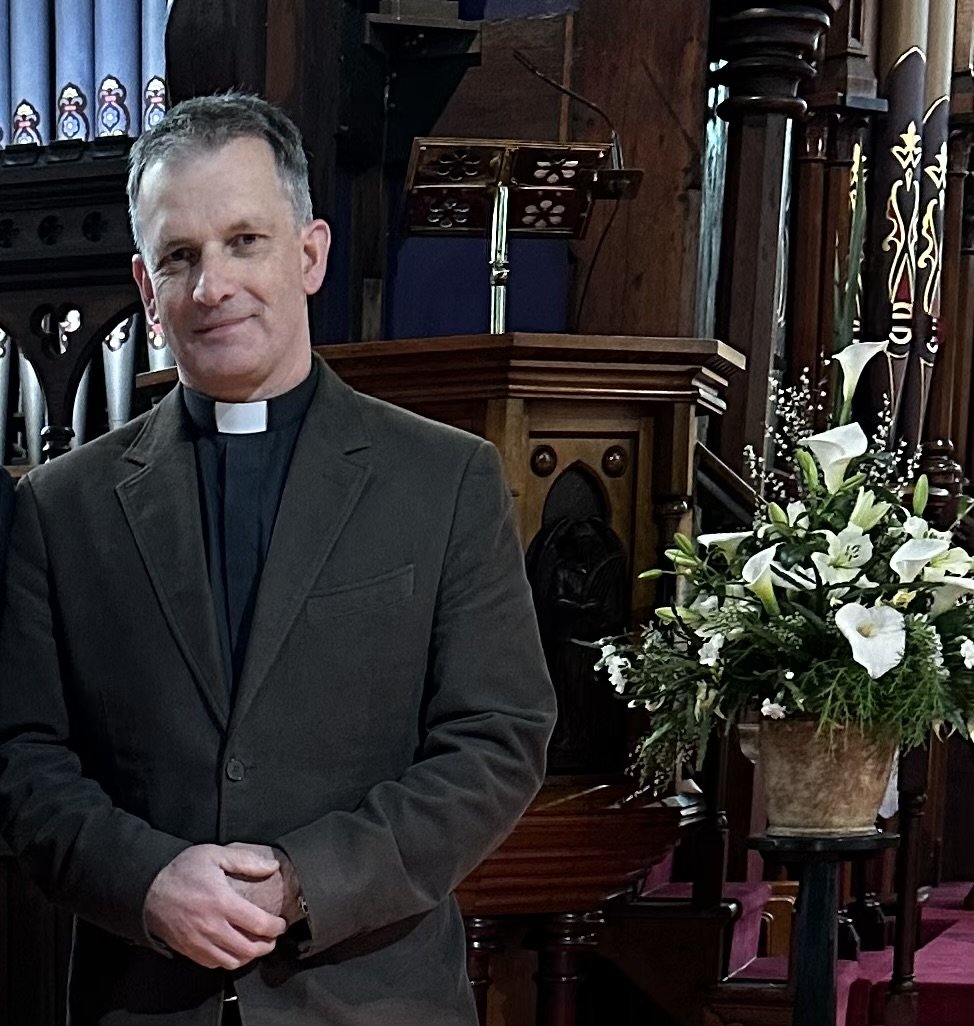
This week I want to enter into a little discussion of clerical vestments. Vestments are ceremonial robes that we use in worship. Often they signal the roles of the various ministers who lead us in worship. The vestments indicate that those who lead the worship do this not by because of their own talents or worthiness, but as representatives of the local Christian community, and by the grace of the gift of holy orders from God.
Vestments are made in different colours to indicate the feast or season of the celebration, and in different shapes and styles, representing the role of the minister or priest and tradition of Christian vesture across the centuries. The principal vestment of the Eucharist (Holy Communion) is the chasuble, which has its origins in those worn by Roman magistrates and imperial officials. Chasubles vary in shape from the original voluminous bell-shaped garment (which can be a problem if the priest’s arms aren’t long!) to the cutaway 'Roman' chasuble which is often highly decorated. Sometimes the chasuble is replaced in Anglican usage by the cope, a decorated voluminous cloak. Both of these vestments are similar in appearance to the phenolion that the Eastern Orthodox use. Another traditional Anglican option was to simply wear a cassock, surplice and stole.
The stole is worn as a sign of holy orders by Bishops, priests, and deacons whenever exercising their orders liturgically. All of these vestments are worn over an alb, a long white tunic, representing a baptismal garment. A shortened version of the alb, the cotta or surplice is worn over what was the traditional street clothing of the clergy - the ankle-length black garment, the cassock (purple for bishops). The cassock and alb is now often combined into one garment the cassock-alb, over which is worn the stole and often ,when presiding at the Eucharist, a chasuble.
God Bless you


Parish Officers


Parish Governance






Parish Groups


From the Vicar